
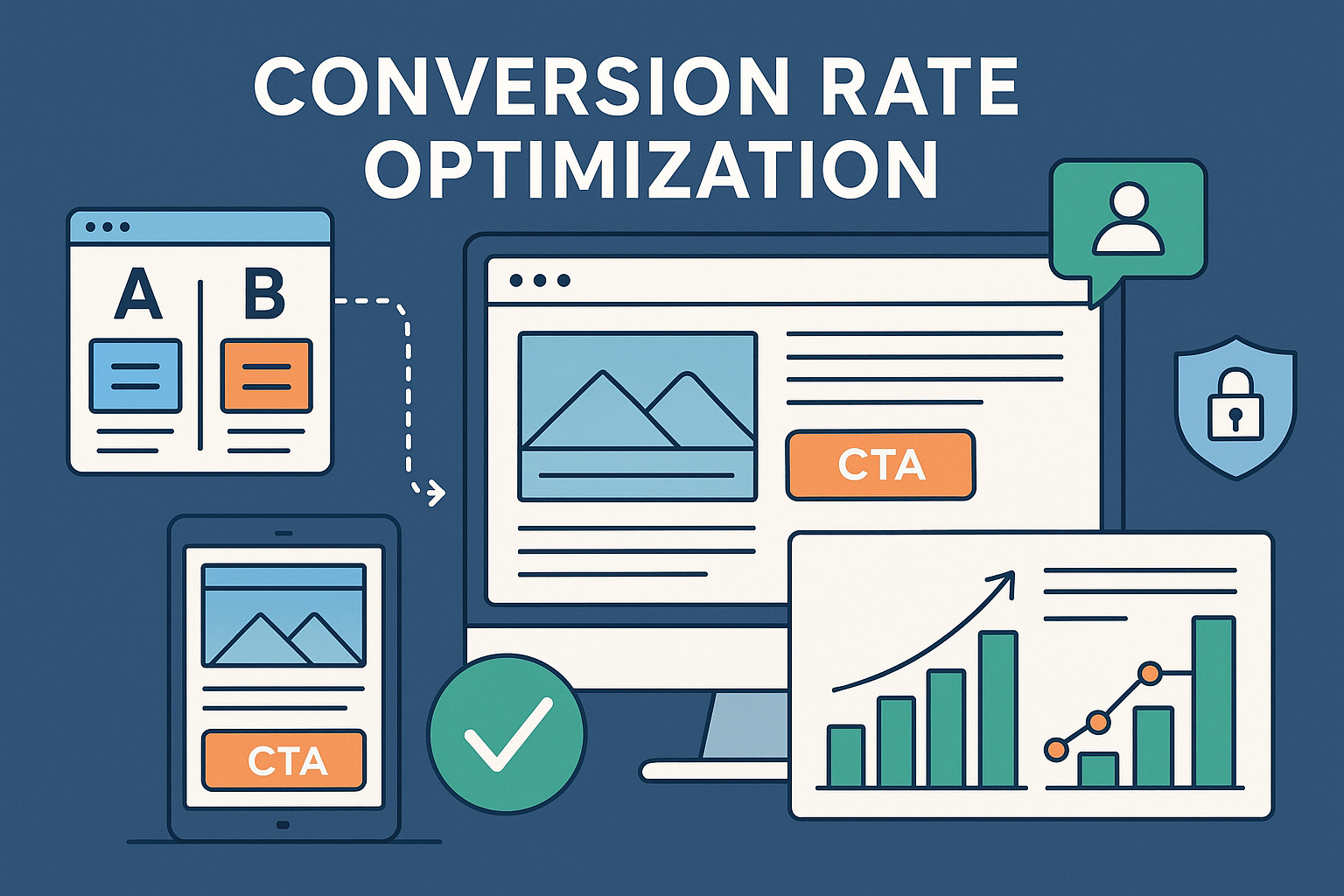
Conversion Rate Optimization (CRO) is a critical process in digital marketing focused on increasing the percentage of visitors who complete a desired action on a website or mobile app. This action can range from making a purchase, filling out a form, subscribing to a newsletter, or any other goal that drives business success. CRO is not just about improving a single aspect of a site but involves a systematic approach to enhance overall user experience and engagement to achieve higher conversion rates.
Understanding Conversion Rate Optimization
At its core, Conversion Rate Optimization involves identifying the barriers that prevent visitors from converting and experimenting with changes to remove those barriers. The process includes generating ideas to improve site or app elements, validating these hypotheses through A/B testing or multivariate testing, and continuously enhancing the user journey.
Why CRO Matters
Implementing an effective CRO strategy can lead to several substantial benefits:
- Increase revenue per visitor by converting more of the site traffic.
- Lower customer acquisition costs because more visitors become customers without additional marketing spend.
- Maximize the value of existing visitors, getting more conversions from the same number of users.
- Support sustainable business growth by continuously improving digital interactions.
A simple example illustrates this: If a landing page converts 10% of its 2,000 monthly visitors into customers, it yields 200 conversions. Through optimization, if the conversion rate is increased to 15%, conversions jump to 300 per month – a 50% increase without increasing traffic.
Key Elements of CRO Strategy
Successful Conversion Rate Optimization relies on several interrelated components:
- User Research: Deep understanding of audience needs, pain points, and behaviors.
- Website Analytics: Real-time data collection and analysis to identify trends and problem areas.
- User Experience (UX) Design: Crafting intuitive and seamless user interactions.
- Landing Page Optimization: Refining key entry points for maximum impact.
- Persuasive Copywriting: Creating clear, action-oriented messaging.
- Page Load Speed: Ensuring fast loading times to reduce bounce rates.
- Trust Building: Incorporating security badges, testimonials, and reviews.
- Conversion Funnel Analysis: Tracking drop-off points throughout the user journey.
- Mobile Optimization: Providing excellent functionality across all devices.
Conversion Rate Optimization Techniques
To increase conversions, marketers use a variety of tested techniques, including:
- Optimizing Call-to-Action (CTA): Crafting compelling CTA buttons with strategic placement and prominent colors to guide users toward the next step.
- Improving UX: Simplifying navigation, enhancing site speed, and ensuring mobile responsiveness for seamless experiences.
- Testing Variations: Running systematic A/B tests to compare page element variations and identify high performers.
- Personalization: Tailoring content and offers based on user demographics, behavior, or preferences.
- Leveraging Social Proof: Using customer testimonials, reviews, and social media mentions to build credibility.
- Building Trust: Displaying certifications and clear policies to alleviate user concerns.
Establishing Conversion Metrics
Before optimizing, it’s essential to define what counts as a conversion based on business type and goals. Common metrics include:
- Ecommerce: Sales, add-to-cart rates, checkout completions.
- Media: Pageviews, ad views, newsletter sign-ups.
- B2B: Leads generated, form completions, white paper downloads.
- Travel: Bookings, ancillary purchases, social shares.
With clear metrics, businesses can focus efforts on increasing meaningful actions that align with their objectives.
Conversion Rate Optimization Process
A data-driven, iterative process ensures effective CRO:
- Define clear conversion goals aligned with business objectives.
- Analyze the current sales funnel to identify bottlenecks and drop-off points.
- Prioritize high-traffic or underperforming pages for optimization.
- Develop and formulate hypotheses aimed at improving conversion.
- Set up and run tests (A/B or multivariate) to validate hypotheses.
- Analyze results and implement winning changes.
- Continuously iterate improvements based on new data.
Starting with pages that receive significant traffic or are underperforming leads to faster, impactful results.
Best Practices for Conversion Rate Optimization
- Conduct thorough audience and traffic research to understand user motivations.
- Test clear and action-driven CTAs that guide users appropriately.
- Avoid overwhelming visitors with too much information; each page should have a clear next step.
- Optimize mobile responsiveness ensuring all functions and CTAs work smoothly.
- Speed up page load times to reduce bounce rates and improve engagement.
- Use trust signals like testimonials, case studies, and industry badges.
- Personalize content and recommendations to suit visitor preferences.
- Use heatmaps and analytics to identify and enhance engaging page areas.
Learning from Experiments and Data
It’s important to recognize that not all tests will lead to winning changes — only about 12% of CRO experiments produce clear positive outcomes. However, failed tests still provide invaluable learning insights. CRO is an ongoing experimentation process where every test, whether successful or not, contributes data to better understand user behavior and preferences.
Examples of successful CRO experiments show how subtle design changes or tailored customer experiences can significantly impact conversions. Regular model optimizations and user-focused testing ensure that personalization efforts remain relevant as customer needs evolve.
Thought on CRO
Conversion Rate Optimization is a vital discipline for any digital business aiming to maximize user engagement and revenue without necessarily increasing traffic. Through a strategic combination of research, design, testing, and iteration, businesses can create compelling and optimized user experiences that convert more visitors into loyal customers. Continuous learning and adjustment based on data ensure CRO remains an evolving, highly effective marketing investment.
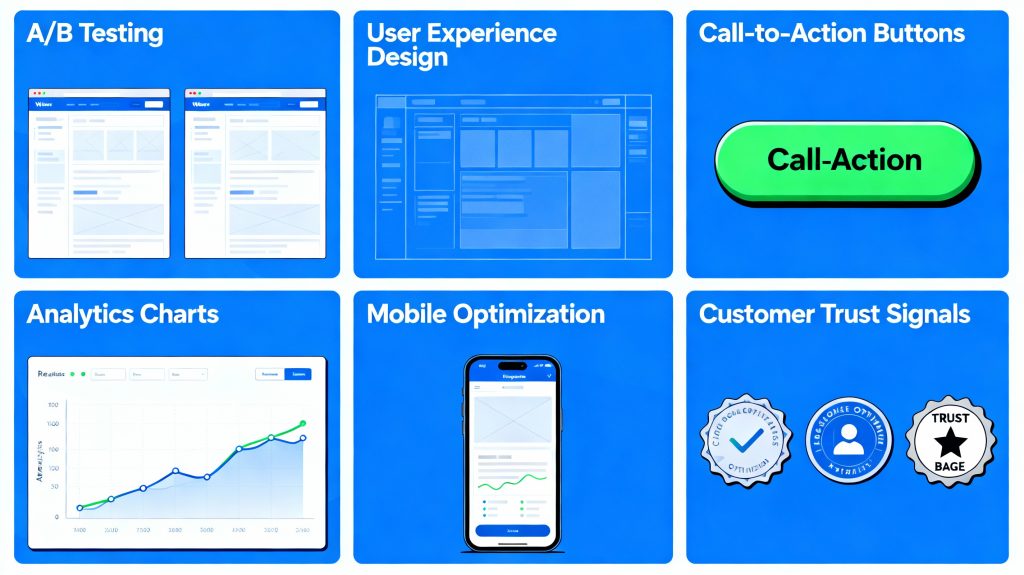
Frequently asked questions (FAQs) about Conversion Rate Optimization (CRO):
What is Conversion Rate Optimization (CRO)?
CRO is the process of increasing the percentage of website or app visitors who take a desired action, such as making a purchase or subscribing to a newsletter, by improving various elements like design, messaging, and user experience.
Why is CRO important for my business?
CRO helps increase revenue per visitor, lowers customer acquisition costs, and maximizes the value derived from existing traffic, ultimately leading to sustainable business growth.
How do you calculate conversion rate?
Conversion rate is calculated by dividing the number of conversions by the total number of visitors or interactions and then multiplying by 100 to get a percentage.
What are common techniques used in CRO?
Common techniques include A/B testing, improving call-to-action (CTA) placement, enhancing page load speed, personalizing content, optimizing for mobile devices, and using social proof to build trust.
What is A/B testing and multivariate testing?
A/B testing compares two versions of a webpage to see which performs better, while multivariate testing compares multiple variables simultaneously to identify the best combination.
How do I identify which pages to optimize first?
Prioritize pages with high traffic and low conversion rates or high-value pages underperforming compared to others by analyzing user behavior and conversion funnels.
What are some common CRO mistakes to avoid?
Common mistakes include ending tests too early before reaching statistical significance, neglecting mobile optimization, overcrowding pages with too much information, and ignoring user research.
How long does it take to see results from CRO efforts?
Results vary, but meaningful insights typically require running tests until statistical significance is achieved, which can take weeks depending on traffic volume.
Is CRO a one-time process?
No, CRO is an ongoing process involving continuous experimentation, analysis, and optimization to adapt to changing user behavior and market conditions.
How can I build trust with my website visitors?
Use trust signals such as customer testimonials, security badges, clear privacy policies, and transparent return policies to reduce user hesitation.


